SUMMARY OF THE ARTICLE
1.- What the reinvestment exemption is.
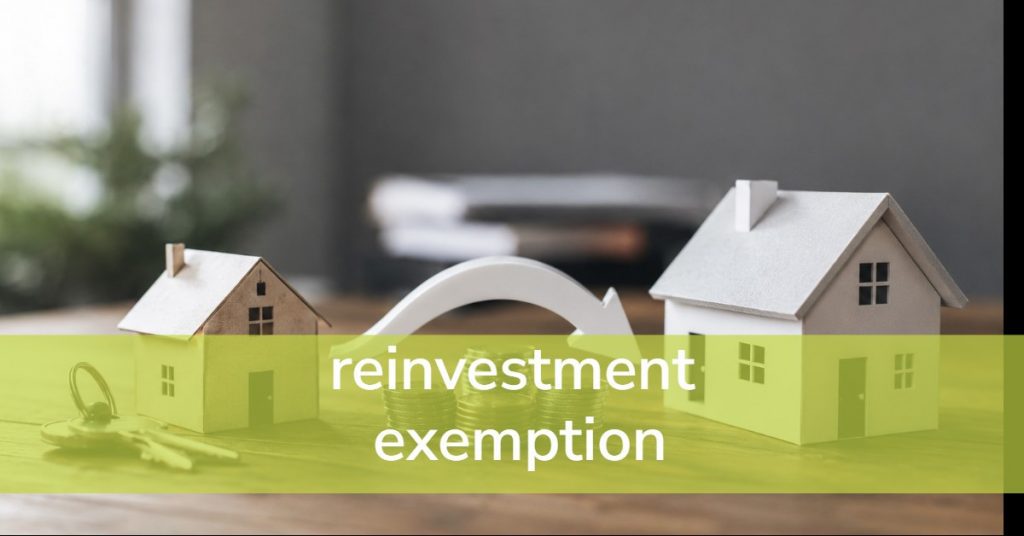
It allows the capital gain obtained on the sale of your main home to go untaxed under Personal Income Tax (IRPF), provided the amount is reinvested in a new main home within a two-year period.
2.- What happens if you buy before you sell.
The two-year period can run either forwards or backwards. This means the exemption could apply even where the new home is purchased before the previous one is sold, including cases financed through a mortgage loan.
3.- What the Tax Authorities require in these cases.
According to a recent criterion of the Directorate General for Taxation, the reinvested funds would not need to be literally the same money obtained from the sale. Reinvesting an equivalent amount within the deadline would be sufficient.
It is common, when moving to a new main home, for the owner to purchase the new property first and sell the previous one afterwards. This raises frequent concerns. Would the right to the reinvestment exemption be lost if the order of these transactions is reversed? In this week’s article, we look at how this exemption applies when the purchase takes place before the sale. And what the Tax Authorities have recently clarified on this matter.
What does the Law say?.
Article 38.1 of the Spanish Personal Income Tax Law regulates the reinvestment exemption for main homes. In simple terms, this exemption allows the capital gain obtained on the sale of your main home to go untaxed, provided the amount is reinvested in a new main home. According to Article 41 of the Income Tax Regulation, the reinvestment must take place within a period of 2 years, which may run either before or after the sale of the main home.
This means it is perfectly possible for the new home to be acquired before selling the previous one. However, it is essential that both transactions fall within that two-year period. There is, however, a second and more complex question worth examining. What happens if, to buy first, it was necessary to take out a loan?
Buying with a mortgage. Can the exemption still apply?.
This is precisely the scenario examined in a recent binding ruling issued by the Directorate General for Taxation (V0071-26). A taxpayer purchased a new main home using a mortgage loan. Some months later, he sold what had until then been his main home and used the proceeds to pay off that loan. Since the sale proceeds were not used directly to purchase the new home (but rather to cancel an existing loan) the question was whether the exemption could still apply.
The binding response from the Directorate General for Taxation.
Following a criterion already established by the Central Economic-Administrative Tribunal in 2014, the DGT recalls that money is a fungible asset. In other words, it is not necessary for the reinvested amounts to come directly and specifically from the sale. It is sufficient to reinvest, within the two-year period, an amount equivalent to that obtained on the sale. This applies even where part of the price of the new home was paid using third-party financing, whether a mortgage or a personal loan. This interpretation is also supported by a 2020 Supreme Court ruling.
Accordingly, if the taxpayer reinvests the full amount obtained from the sale, the capital gain would be exempt in its entirety. If only part is reinvested, the exemption would apply proportionally to the amount actually reinvested.
The concept of a main home.
For a property to be regarded as a main home, the regulation generally requires continuous residence there for at least three years. There are exceptions to this period. For instance, when the change of address is due to a job relocation, marriage, separation, or the death of the owner. Each case, however, needs to be assessed individually.
Conclusion.
This criterion may prove particularly useful for those who, for practical reasons, need to purchase their new home before being able to sell the previous one. At White-Baos Lawyers, we can help you assess whether your case meets the requirements for the reinvestment exemption. Do not hesitate to contact us.
The information provided in this article is not intended to be legal advice but merely conveys information relating to legal issues.
Carlos Baos (Lawyer)
White & Baos.
Tel: +34 966 426 185
E-mail: info@white-baos.com
White & Baos 2026 – All Rights Reserved.


